AI-empowered Chiller Sequencing Control: A Probabilistic Cooling Load Prediction-based Robust Chiller Sequencing Control Strategy
基於概率冷負荷預測的魯棒冷機序列控制策略
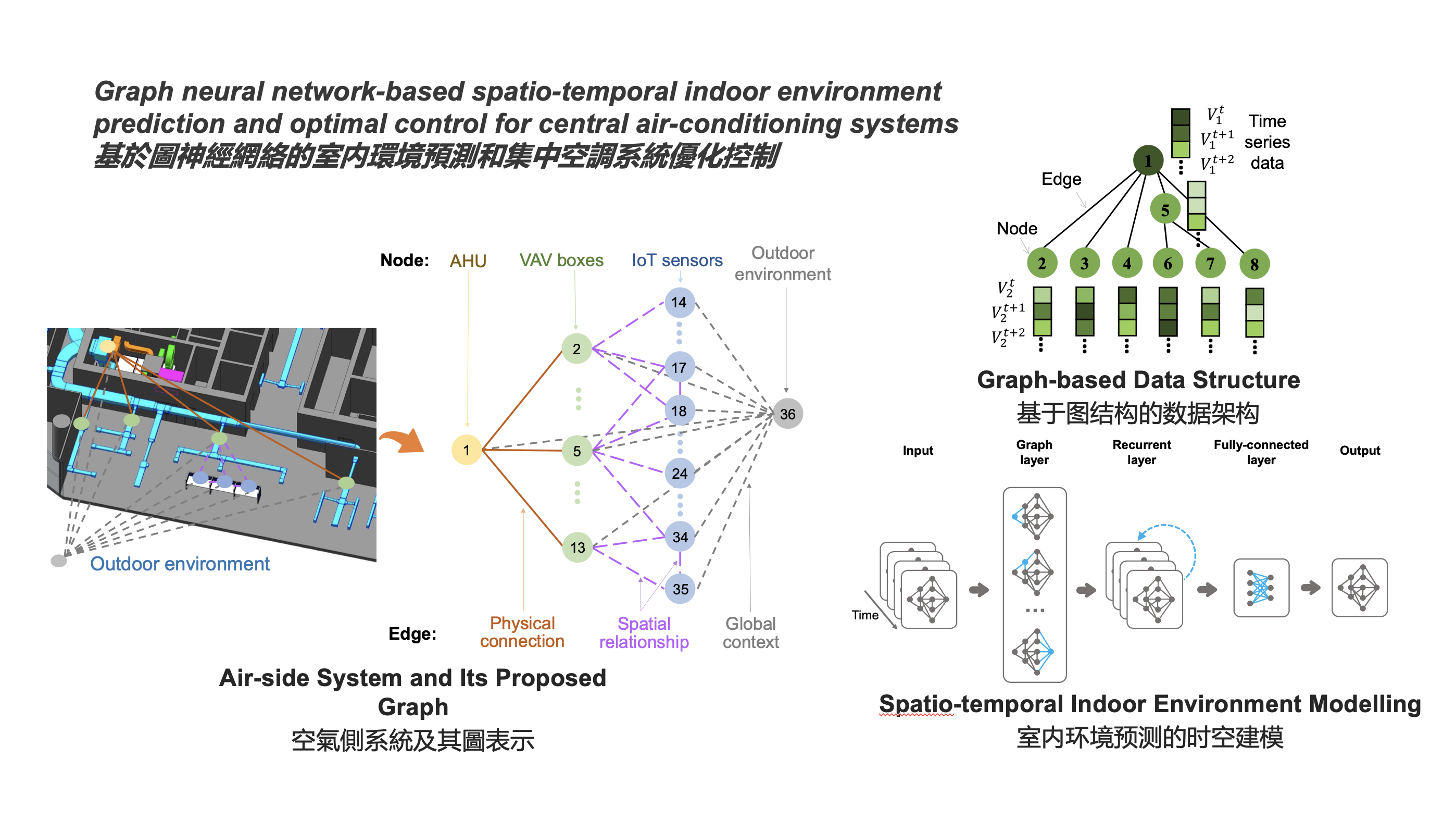
Traditional load forecasting relies on single-point predictions—ignoring the inherent uncertainty in real-world systems. This often leads to overreaction, inefficient control, and unnecessary system switching.
We introduce a probabilistic forecasting paradigm that explicitly models uncertainty arising from sensor noise, data bias, and dynamic environmental conditions. By capturing full predictive distributions rather than fixed values, our approach enables more robust and informed decision-making.
Built on this intelligence, our optimization framework minimizes unnecessary on/off switching, stabilizes system operations, and significantly enhances energy efficiency—unlocking a new level of precision and resilience in building control.
Data-driven Chiller Plant Health Monitoring Strategy
Physics-Guided Optimal Sequencing Control Strategy for Parallel Variable Speed Drive Pumps
數據驅動的冷水機組健康監測 & 基於物理引導的數據驅動變頻水泵台數控制
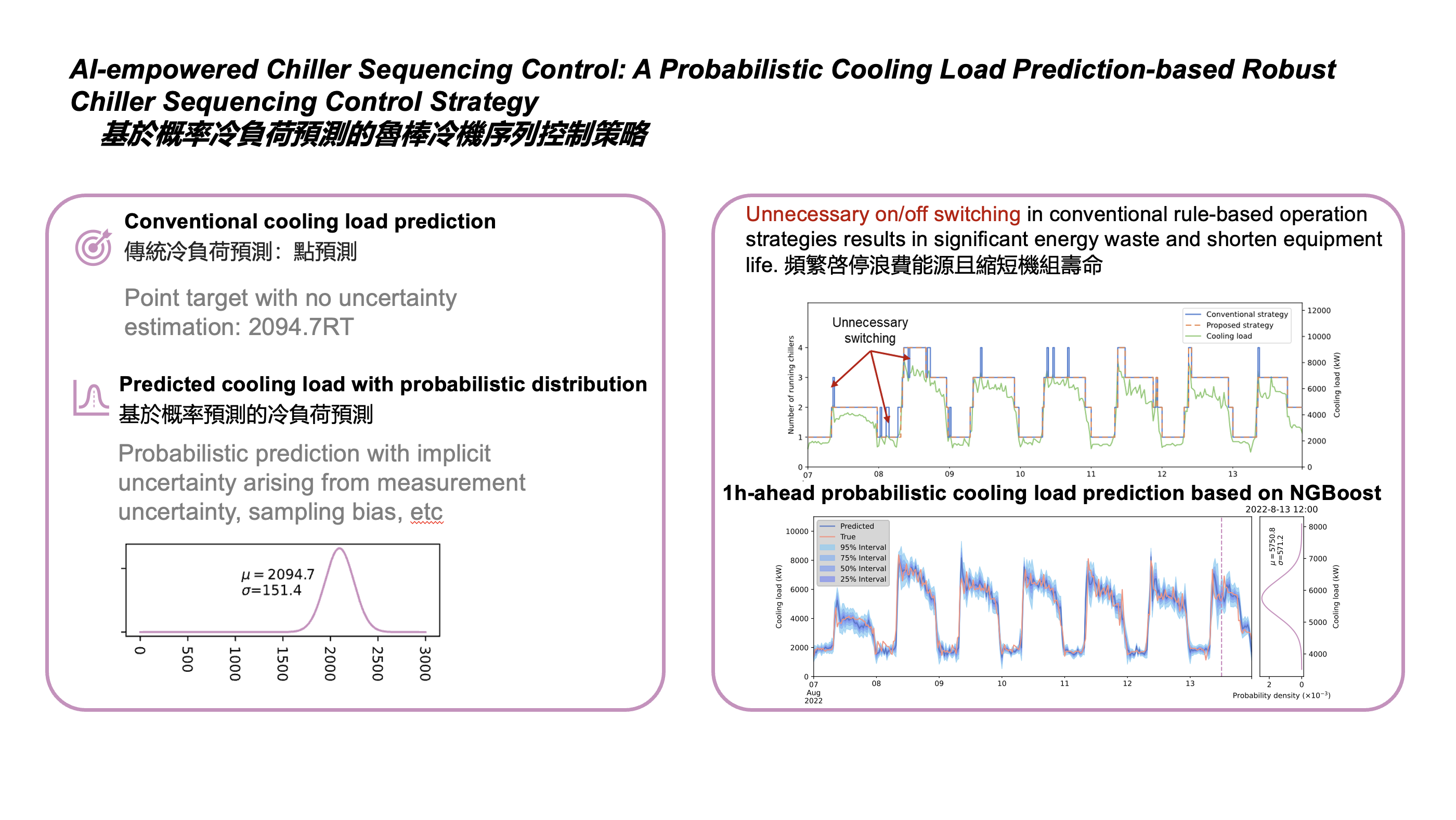
Black-box models lack trust. Pure physics lacks adaptability. We redefine the paradigm by combining both.
Our physics-guided AI framework embeds first-principles understanding directly into data-driven models—creating a new class of intelligent systems that are transparent, scalable, and highly precise.
This enables continuous, real-time optimization of system behavior—from predicting performance under unseen conditions to autonomously selecting optimal operating strategies. The result: dramatically improved efficiency, deeper system insight, and a new standard for intelligent infrastructure.
Graph neural network-based spatio-temporal indoor environment prediction and optimal control for central air-conditioning systems
基於圖神經網絡的室内環境預測和集中空調系統優化控制
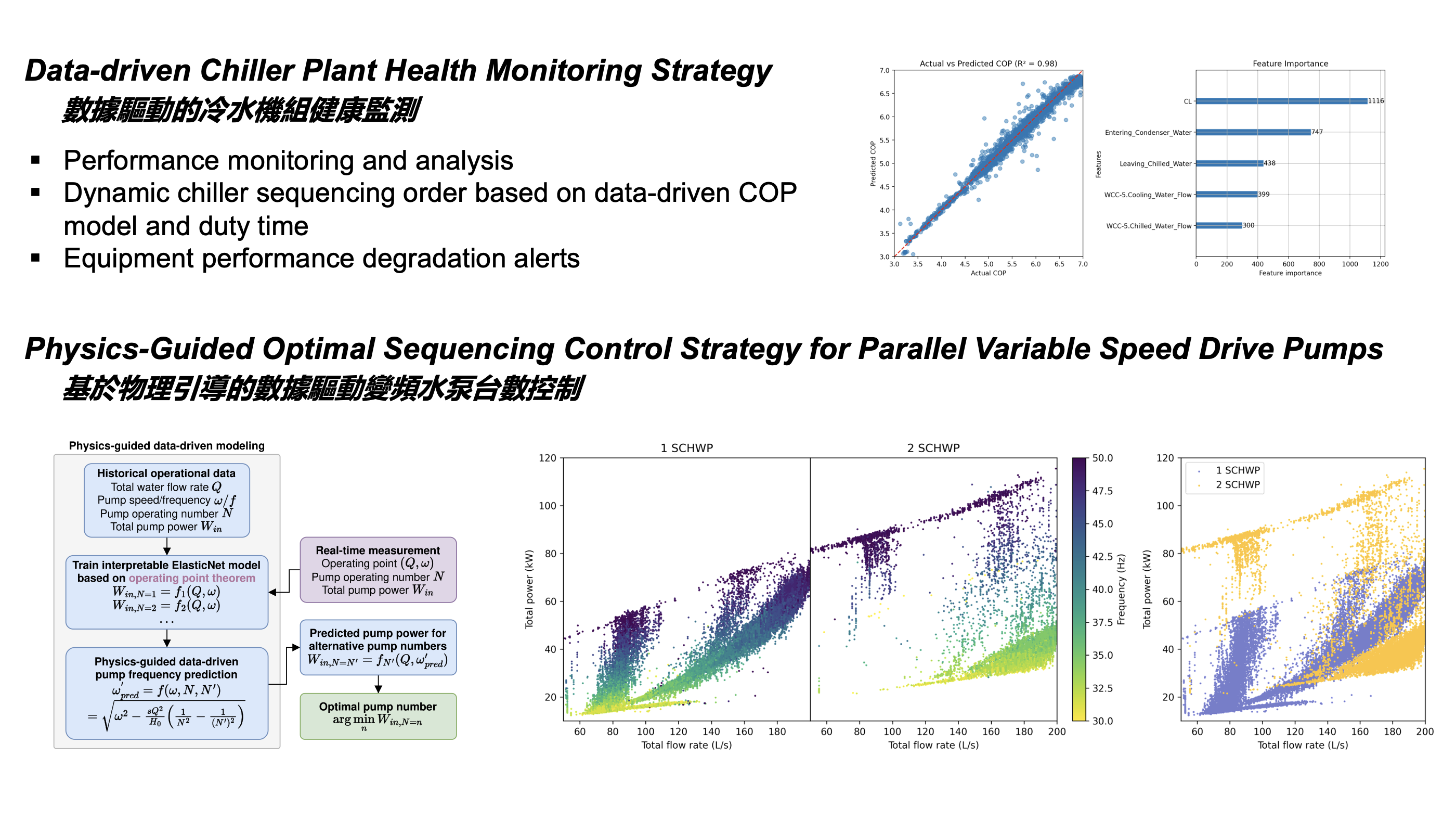
We pioneer a next-generation graph-based intelligence framework that redefines how buildings are understood and optimized. By fusing air-side systems, IoT sensing networks, and dynamic outdoor conditions into a unified data graph, we unlock a high-resolution representation of complex indoor environments.
Built upon this foundation, our spatio-temporal modeling engine captures hidden dependencies, anticipates environmental dynamics, and enables predictive, self-evolving control strategies. The result is a new paradigm of intelligent buildings—autonomous, adaptive, and continuously optimized for performance, efficiency, and human comfort.